Introduction: The Hidden Backbone of Your Renovation
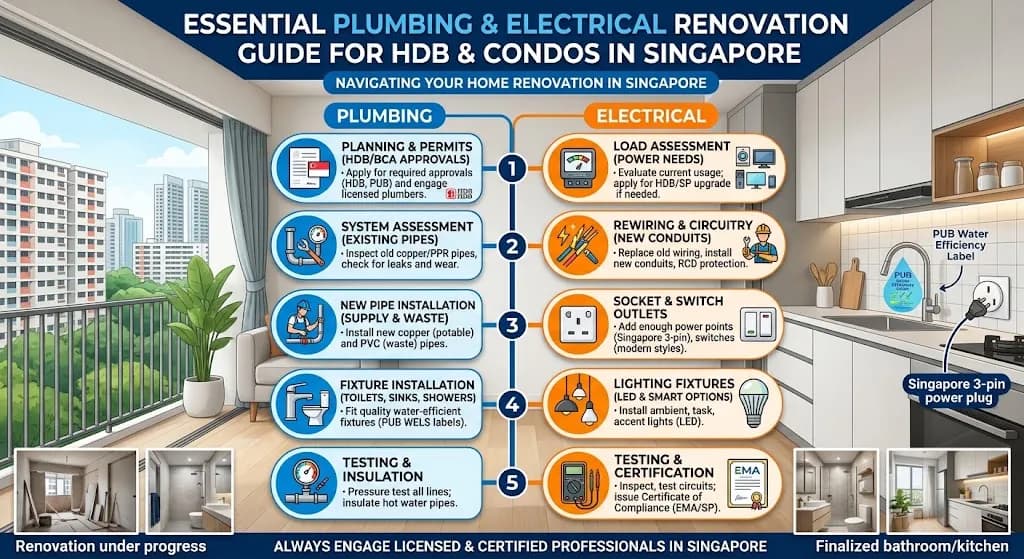
When renovating a home in Singapore—whether a brand-new HDB BTO or an older resale condo—plumbing and electrical systems form the invisible backbone of safety, everyday comfort, and regulatory compliance. While surface finishes like cabinetry and tiles define your aesthetic, improper M&E (Mechanical & Electrical) planning can lead to water leaks, power trips, and costly compliance issues down the line.
In this technical guide, Mahi Interior outlines the regulatory requirements, safety codes, and execution best practices for your home's infrastructure.
1. Electrical Rewiring & Smart Home Preparation
Modern households rely on numerous high-power appliances, smart switches, and induction cooking setups. Upgrading your electrical distribution network ensures your flat meets current Energy Market Authority (EMA) and Singapore Standard SS 638 safety standards.
- Circuit Breaker & DB Box Upgrades: Modernizing your main switchboard with a Residual Current Circuit Breaker (RCCB) provides crucial protection against short circuits and earth leakage.
- Dedicated Lines for High-Power Appliances: Appliances such as induction hobs, storage water heaters, and multi-split air conditioning units require dedicated high-amperage lines and isolators.
- Smart Switch Neutral Wires: Standard HDB light switches often omit a neutral wire. Pre-wiring neutral loops in switch boxes enables seamless integration with smart home switches.
- Safety Regulations: In compliance with safety standards, 3-pin power outlets are strictly prohibited inside HDB bathrooms to prevent moisture hazards.
2. Plumbing, Concealment & Waterproofing Rules
Plumbing failures are among the most common causes of water damage affecting both your home and adjacent units. Strict adherence to Public Utilities Board (PUB) guidelines ensures durable, leak-free performance.
- Piping Upgrades in Resale Flats: Aging galvinized iron or copper pipes in older resale units should be replaced with durable stainless steel or copper piping during the wet-works phase.
- Pipe Concealment Restrictions: PUB and HDB prohibit permanently embedding main drainage or supply pipes directly into structural walls or floor slabs. Concealed pipes must be boxed up with false walls or carpentry featuring a removable access panel (minimum 600mm x 600mm).
- Mandatory Waterproofing & Ponding Tests: In wet areas like bathrooms and service yards, contractors must apply a complete waterproofing membrane followed by a compulsory 24-to-48-hour ponding test before tile laying.
Regulatory Compliance Checklist
| Work Scope | Regulatory Requirement | Certified Personnel Required |
|---|---|---|
| Electrical Rewiring & Upgrades | SS 638 Code of Practice / EMA Form CS/5H | EMA Licensed Electrical Worker (LEW) |
| Water Pipe & Sanitary Alterations | PUB Water & Sewerage Regulations | PUB Licensed Plumber (LP) |
| Gas Pipe Alterations | City Energy / Energy Market Authority | Licensed Gas Service Worker (LGSW) |
Summary
Getting your M&E setup right during early construction prevents costly tear-outs later. Mahi Interior manages all regulatory submissions, licensed professional sign-offs, and quality checks across Singapore to ensure your home is safe and compliant.